Most travelers assume glamping vs camping is an easy math problem: pitching a tent must be cheaper than sleeping in a furnished one. On paper, it looks that way. But the real comparison gets murkier once you count the gear you have to buy, the supplies you keep running out of, and the add-ons that glamping rates quietly bundle in for free.
In this guide, we break down the actual nightly price gap, then dig into the hidden costs that make camping pricier than it first appears. We also look at what a glamping rate really includes, when camping wins the money battle, and when glamping is the smarter budget choice. Finally, we share timing and booking tips that can shave a serious chunk off either option, plus a bottom-line summary to help you decide based on your trip length and how often you actually get outdoors.
Glamping vs Camping: The Real Nightly Price Gap
Start with the headline numbers. A basic tent campsite in the US typically runs $20-50 per night, while a glamping tent typically costs $100-300 per night. That’s a raw difference of $80-250 per night, and it’s the figure most people stop at when they declare camping the winner.
What each rate actually buys
The catch is that these two prices don’t cover the same experience. A campsite fee usually gets you a patch of ground, a parking spot and access to shared bathrooms. Everything else — a place to sleep, light to read by, a way to cook — comes from gear you own or rent, plus supplies you buy along the way.
Glamping rates, by contrast, often bundle in bedding, furniture and amenities that camping treats as add-ons. A real bed with made-up linens, string lights or lamps, and sometimes even a fire pit already stocked with wood can all be part of that higher nightly price. So before any hidden costs enter the picture, the gap is $80-250 per night — but that number assumes your camping gear is free, which it rarely is. The next sections add those costs back in.
Hidden Costs That Make Camping Pricier Than It Looks
Camping’s nightly fee is only part of what you actually pay. Before your first trip, you need gear, and a starter kit — tent, sleeping bags, stove and cooler — runs $300-600 upfront. That’s the single biggest reason a “cheap” camping weekend can end up costing more than expected, especially if you were comparing it against other options based on the campsite rate alone.
Then there are the running costs. Camping trips usually require driving to a store for ice, firewood and supplies, which adds $20-40 per trip. It rarely feels like much in the moment, but it shows up on every single outing. Last-minute purchases at small rural stores tend to cost more than the same items at home, so a forgotten bag of charcoal can carry a surprising markup.
Gear also wears out. Zippers fail, air mattresses leak, coolers crack, and stoves need replacement parts. Spread over multiple trips, that wear and tear quietly raises the true per-night cost well above the campsite fee you thought you were paying.
- Replacement cycles: A budget tent might last a few seasons of regular use before seams or poles give out, meaning a portion of that $300-600 kit is quietly being consumed every trip.
- Forgotten-item tax: Missing headlamps, batteries, tent stakes or a can opener usually mean buying duplicates on the road, often at premium prices far from home.
- Storage and maintenance: Gear needs dry storage space, and mildew or rodent damage from careless packing can force early replacements.
What Glamping’s Higher Rate Actually Includes
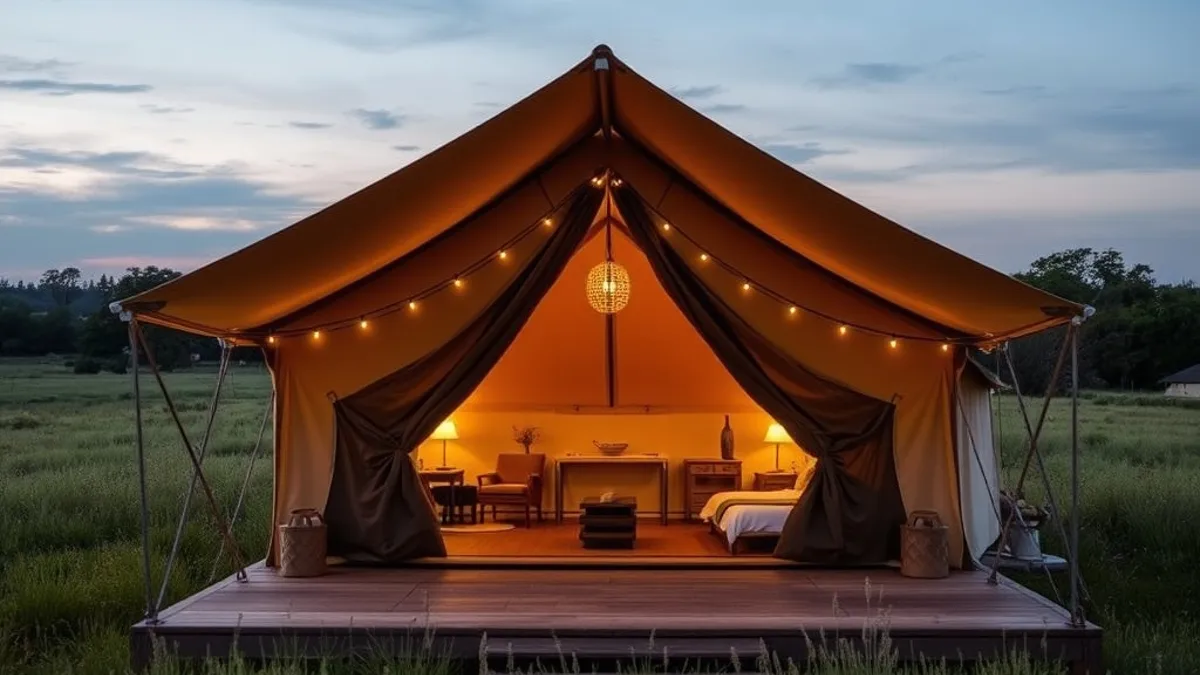
Glamping’s nightly rate looks steep until you see what it covers. A typical rate includes a real bed with linens, lighting, and sometimes meals or coffee in the morning. You show up with a duffel bag and that’s it — no tent to pitch, no stove to pack, no cooler to fill with ice.
Zero equipment investment
The biggest financial advantage is what you don’t buy. Because everything you need to sleep comfortably is already set up and waiting, your first glamping trip requires no equipment purchase at all. Compare that with traditional camping, where you need to assemble a full starter kit — shelter, bedding, a way to cook, and something to keep food cold — before you’ve even paid for a single night at a campground.
Finding the break-even point
Here’s a simple way to think about it. If you camp once and pay for a full set of gear plus a few nights at a basic campsite, your true per-night cost can climb well past what a glamping tent charges — without the comfort. Glamping can undercut camping when gear costs are spread over just a few trips. The break-even usually arrives after several outings, because each additional camping trip dilutes that upfront investment. If you only travel once or twice a year, that break-even may never come, and glamping’s all-inclusive rate is effectively the cheaper way to sleep outdoors. The next section covers when the math flips back toward camping.
When Camping Wins the Money Battle
Camping starts to look like the clear money winner once your trip stretches past a week. The upfront investment in a tent, sleeping bags, a stove and a cooler suddenly spreads across seven or more nights, dropping the effective cost per night to a fraction of even the cheapest glamping rate. A $400 gear kit on a ten-night trip adds roughly $40 per night on its first outing, and that number keeps shrinking every time you pitch the tent again.
The math gets even better for repeat campers. Gear doesn’t expire after one season, so a family that camps a few weekends a year is essentially paying pennies per night for equipment they bought years ago. Meanwhile, travelers who already own everything face almost no cost beyond the $20-50 nightly campsite fee, which makes every additional night cheaper than the last.
There are a few simple ways to push that per-night figure down even further:
- Split the gear with friends: a group sharing one stove, cooler and tent can cut each person’s share of the equipment cost dramatically.
- Buy used or borrow first: secondhand tents and sleeping bags can shave a big chunk off the initial outlay before you commit to new gear.
- Prioritize durable items: spending more upfront on a tent that lasts many seasons lowers your true cost per night with every reuse.
- Track your cost per night: after a handful of trips, most campers find their gear has paid for itself many times over compared to any glamping rate.
If you can see yourself camping several times a year, the long-trip math here is hard to beat. Just be honest about how often you’ll actually go — the savings only materialize when the tent keeps coming out of the garage.
When Glamping Is the Smarter Budget Choice
If you’re planning a single trip — or it’s your first time sleeping outdoors at all — glamping often comes out ahead financially. Instead of laying out serious money for a tent, sleeping bags, a stove and a cooler before you even know whether you enjoy camping, you pay one nightly rate and show up with your clothes. That first trip carries zero equipment investment, which is hard for traditional camping to beat.
Why short trips tip the scales
On a short getaway of one to three nights, gear costs can’t be spread out. Whatever you spend on a starter kit gets divided across just a couple of nights, which can push your effective per-night cost above what many glamping tents charge — and that’s before you’ve bought ice, firewood or the supplies you forgot. Glamping’s nightly rate bundles a real bed, linens and lighting, so there’s nothing to buy, pack or store afterward.
The shoulder-season sweet spot
Timing matters too. Glamping in May or September can shave 30-50% off what a peak-season July trip would cost, since peak prices for both options run 30-50% higher. A shoulder-season glamping tent can end up cheaper than the combined total of peak-season camping — campsite fee plus gear purchases on top — and you still get the bed and the coffee.
Timing and Booking Tips for the Cheapest Rate
When you book matters almost as much as where you book. Campgrounds and glamping sites follow different reservation rhythms, and showing up last-minute during summer almost guarantees you’ll pay peak prices — if you find a spot at all. The good news is that timing is one of the few budget levers that costs you nothing but a little planning. Mark your calendar, set a reminder, and you can often shave a meaningful chunk off your lodging total without changing your destination or your dates.
- Reserve popular campgrounds 3-6 months ahead. The most sought-after state and national park campsites fill up fast, especially near lakes and trailheads. Early booking is how you lock in the lowest nightly rates instead of settling for whatever’s left.
- Book glamping sites 2-4 months out. Early-bird pricing is most common in this window, so reserving a few months ahead often means a better rate than waiting until the calendar fills.
- Travel in May or September. Shoulder season offers the best rates for both stay types, letting you sidestep the June-August markup of 30-50% that applies across the board.
Once you pick your travel dates, check cancellation policies before committing — plans change, and a flexible booking protects both your schedule and your budget. If a site offers free cancellation, book early anyway and adjust later if needed. A little lead time is the cheapest upgrade you can give any trip, and it costs less than any gear, upgrade or add-on on this list.
The Bottom Line for Your Trip Budget
So which option actually leaves more money in your pocket? On paper, camping wins easily: a basic tent site usually runs $20-50 per night, while a glamping tent typically costs $100-300. But that gap shrinks fast once you remember the $300-600 starter kit, the ice and firewood runs, and the slow replacement costs that come with owning gear. Glamping’s higher nightly rate already covers the bed, linens and lighting, so your first trip starts with no equipment bill at all.
How you travel matters more than the sticker price. Long trips and regular weekends favor camping, because the gear investment spreads across many nights and years of use. Short one-off trips favor glamping, since there’s nothing to buy before you arrive. Match the stay type to your trip length and how often you get outdoors, and you’ll spend less either way. If this helped you plan your next trip, leave a comment or share the article with a friend.