Choosing between a safari lodge vs tented camp is one of the first decisions you’ll face when booking your first safari, and it’s easy to get stuck. Both promise wildlife, comfort and that classic bush feeling, but they suit different budgets and travel styles. Price is often the deciding factor: mid-range tented camps typically run $100–$300 per person per night, often 20–30% less than comparable lodges, which usually cost $150–$400 per person per night with meals and game drives included.
This guide breaks down exactly what separates the two. We’ll explain what a safari lodge and a tented camp actually are, compare prices, comfort and facilities, and look at how the wildlife experience and camp atmosphere differ. We’ll also cover when to book each option and help you decide which one fits your trip. By the end, you’ll know which style gives you better value for the money you’re spending.
What Is a Safari Lodge?
A safari lodge is the closest thing to a hotel in the bush. These are permanent structures built with solid walls and proper roofs, with full plumbing — real bathrooms, hot showers and flushing toilets. Most lodges also offer the extras you’d expect from a hotel: swimming pools, spas, restaurants and sometimes gyms or gift shops. After a dusty morning tracking elephants, you can come back to air conditioning, a cold drink at the bar and a swim.
Lodges are typically larger properties, often hosting anywhere from 40 to well over 100 guests at a time. That scale shapes the whole experience. Meals are usually served at set times in a shared dining room, and you’ll eat alongside other travelers swapping stories from the day’s game drives. The atmosphere is more structured and social than intimate, with staff on hand around the clock.
Who a lodge suits best
Safari lodges are the natural pick for travelers who want hotel-style comfort and predictability in the bush. If you’re traveling with young children, celebrating a special occasion, or simply know that a good night’s sleep on a proper mattress behind solid walls matters to you, a lodge removes the variables. You get reliable electricity, dependable facilities and a familiar routine — the wildlife adventure outside, with the comforts of a resort inside.
What Is a Tented Camp?
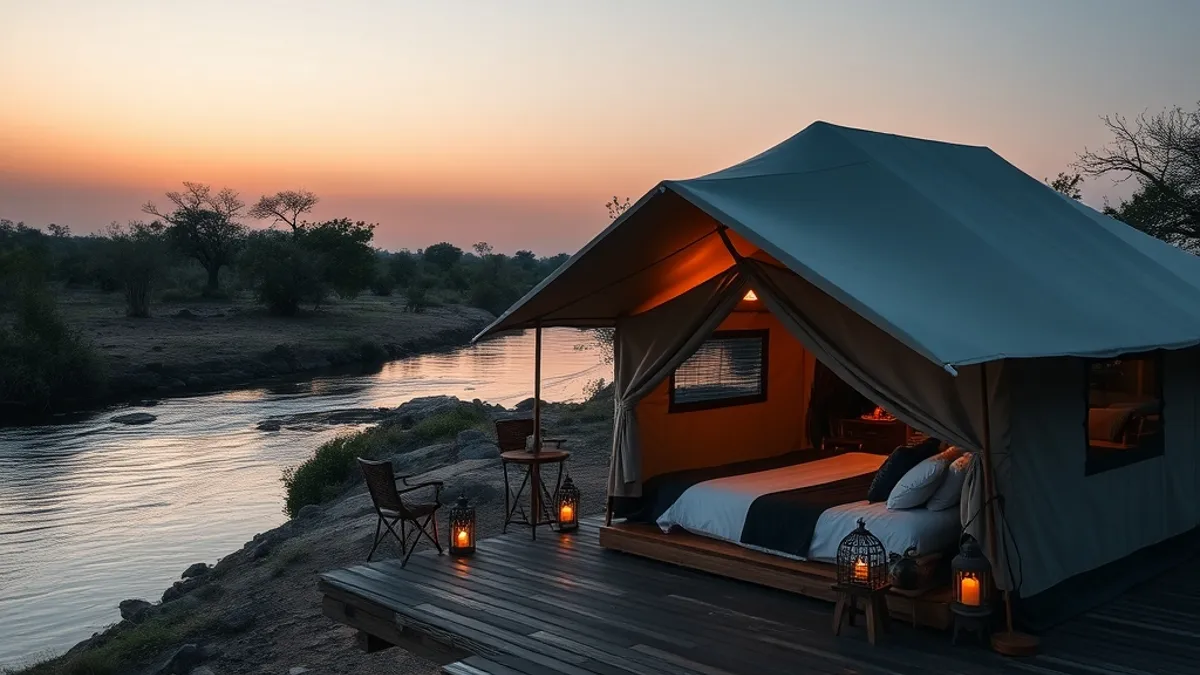
A tented camp is exactly what it sounds like: accommodation made of canvas, pitched on fixed platforms rather than solid foundations. The range is wide. At the simple end, you’ll find basic dome tents with shared facilities. At the luxury end, spacious canvas suites come with real beds, en-suite bathrooms, hot running water and verandas overlooking the plains. Don’t assume “tent” means roughing it — some luxury tented camps rival high-end lodges in comfort.
Scale is the big difference. Tented camps usually host just 8 to 20 guests, which creates an intimate, close-to-nature atmosphere that larger properties can’t match. Dinner is often a shared table where everyone compares notes on the day’s sightings, and the guides tend to know every guest by name by the second night.
The sounds of the bush at night
Here’s what draws many travelers to tents in the first place: there are no solid walls between you and the wildlife. At night you’ll hear lions calling in the distance, hyenas whooping, elephants moving through nearby trees and hippos grunting from the water. Canvas lets the sounds of the bush flow straight into your tent. For many safari-goers, that raw, immersive feeling — falling asleep to the African night — is worth more than any swimming pool. Just be aware it cuts both ways: you may also hear wind, rain and rustling a lot more clearly than you would behind brick walls.
Safari Lodge vs Tented Camp: Price Comparison
Price is where the safari lodge vs tented camp decision gets interesting, because canvas is often the better deal. Mid-range safari lodges typically run $150–$400 per person per night, with meals and game drives included. Comparable mid-range tented camps usually cost $100–$300 per person per night for a similar package. In practice, tented camps often undercut lodges by 20–30% at the same wildlife-viewing standard — same reserve, same animals, same guides’ expertise, lower price tag.
Why the gap? Tented camps have lower construction and operating costs, and their small size means less overhead. Lodges charge for their pools, spas and larger staff teams, whether you use those facilities or not.
Compare full-board rates, not room rates
Before you compare any two properties, check what the rate actually includes. Most safari stays — lodges and tented camps alike — bundle in meals and two game drives per day. That means the headline price is closer to an all-inclusive package than a hotel room rate. A lodge that looks cheaper on paper may cost more once you add meals and activities, while a tented camp quoting a higher room-only price may actually be the better full-board deal. Always compare full-board rates rather than room-only prices, and ask exactly what’s included: park fees, drinks and laundry are common add-ons that vary from property to property. Prices also shift with the seasons, so check current rates with operators before booking.
Comfort and Facilities Compared
When it comes to facilities, safari lodges and tented camps sit at very different points on the comfort spectrum. A lodge is essentially a hotel in the bush: solid walls, air conditioning or ceiling fans, a swimming pool, and often a gym, spa or restaurant serving set meals at fixed hours. Wi-Fi tends to be more reliable too, since the infrastructure is permanent.
Tented camps vary enormously. At the budget end, you might be showering with water poured into a bucket by staff and charging your camera off a limited solar supply. That sounds rough, but many travelers find it part of the charm — you trade amenities for atmosphere and a noticeably lower rate.
The important nuance is that luxury tented camps can genuinely match lodge comfort. Think en-suite bathrooms, hot running water, king beds and private decks, all wrapped in canvas. The gap between a mid-range lodge and a top-end camp is smaller than most first-time safari-goers expect.
- Climate control: lodges usually have air conditioning or heating you control yourself, while tented camps often rely on canvas ventilation, ceiling fans and hot-water bottles on cold nights.
- Power and charging: lodges generally offer round-the-clock electricity, whereas many camps run generators for a few hours a day, so plan camera and phone charging around those windows.
- Family logistics: solid walls, fenced grounds and pools make lodges easier with toddlers; small camps with open walkways and wildlife wandering through are usually better suited to older children.
- Privacy and romance: honeymooners often prefer small camps for candlelit dinners and few other guests, while photographers value the extra space and quiet for editing and gear prep.
Wildlife Experience and Camp Atmosphere
Here is where the choice gets interesting. Small tented camps, often hosting just 8–20 guests, tend to be positioned close to wildlife corridors and river crossings. With fewer vehicles and fewer guests, game drives can be more flexible — if your guide spots lions stalking a kill, you can often stay longer instead of turning back on a fixed schedule.
Larger lodges bring a different energy. With 40–100+ guests, there is a social buzz around the dinner table, and you will swap sightings stories with travelers from all over the world. Group game drives are the norm, and the reliable facilities — pools, bars, spacious lounges — are welcome after a long, dusty day out.
What a typical safari day looks like
Whichever you choose, the rhythm is similar. Most safari stays include two game drives per day, roughly 3–4 hours each: one at dawn, when predators are most active, and one in the late afternoon, ending with a sundowner before dark. The difference is in how those drives feel — intimate and adaptable in a small camp, more structured and social at a lodge.
If your priority is maximum time with the animals and a guide who learns your interests, lean toward a small camp. If you want comfort, company and predictability, a lodge delivers.
When to Book Each Option
Timing your booking matters more in safari country than at most hotels. A city hotel can usually squeeze in one more guest, but a small tented camp cannot conjure an extra tent, and a lodge cannot always add another vehicle to a game drive. Availability, not price, is often the first thing to disappear. Small tented camps have limited tents, so they fill up fastest, while larger lodges have more rooms to spread demand across. That does not mean lodges are easy to book in high season — the most popular ones sell out early too — but it does mean your margin for error shrinks dramatically at intimate camps. Here is a simple way to plan:
- Identify your travel window first. Peak season in East Africa runs June–October, when wildlife viewing is at its best and demand is highest. Knowing your dates early shapes everything else, from which camps still have space to what you will pay.
- For peak-season trips, reserve 6–12 months ahead. This is essential for small tented camps, where a handful of tents can sell out many months in advance. If you are traveling with a group or want adjoining accommodation, add even more lead time.
- Consider the shoulder months of April–May and November. These bring lower rates and more last-minute availability at both lodges and camps, often with still-excellent game viewing. Rain may affect some roads, so ask operators about conditions in your specific area.
- In shoulder season, book 2–4 months ahead. That is usually enough to secure mid-range prices without the scramble of peak-season planning.
- Compare full-board rates before committing. Most safari stays include meals and game drives, so judge properties on the total package rather than the room rate alone.
One last tip: if you have your heart set on a specific small camp, treat the booking window as non-negotiable. Camps that are fully booked rarely have cancellations you can count on, and waitlists are informal at best. Flexibility on dates or property will always get you better value than flexibility on neither. If your dates are locked by school holidays or leave schedules, book the moment your window opens, and ask your operator directly about cancellation policies before paying a deposit.
Which Should You Choose?
So, which one wins the safari lodge vs tented camp debate? If you’re a comfort-first traveler, traveling with young kids, or you simply want hotel-style amenities after a dusty day of game drives, a lodge is the safer pick. The predictability of solid walls, reliable power and shared dining with other guests suits families and larger groups especially well.
If you’re watching your budget or craving intimacy, a tented camp delivers. With camps hosting just 8–20 guests, you get closer to nature, more personal game drives, and often 20–30% savings at the same wildlife-viewing standard. Ultimately, the choice comes down to three things: your comfort level, your budget and your group size. There’s no wrong answer — only the one that fits your travel style. Which would you pick? Let us know in the comments, or share this article with your safari crew.